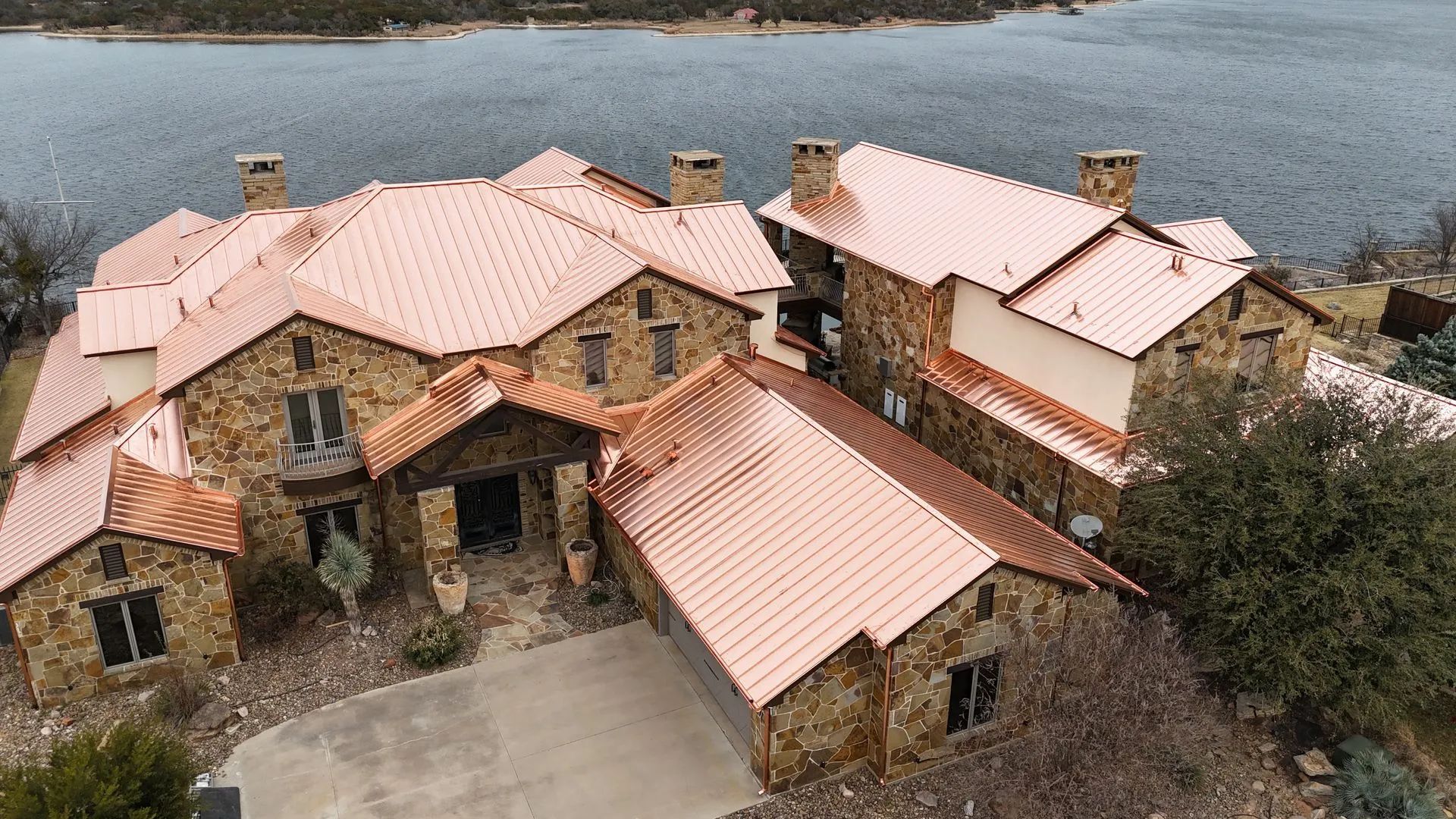
Are Metal Roofs Really Noisy in the Rain?
QUICK ANSWER: A metal roof built over solid decking measures around 52 decibels during a rainstorm, compared with about 46 decibels for asphalt shingles, a gap most people cannot actually hear. The metal panel itself is rarely what makes a roof loud. Solid decking, underlayment, attic insulation, and the dead air space above the ceiling each absorb impact energy before it reaches the rooms below. A roof that skips one of those layers, most often an open-frame structure like a barn or metal building, can climb toward 61 decibels, close to the volume of normal conversation. On a properly assembled standing seam roof over a finished attic, rain reads as a steady, even sound rather than a drumming one.
Spring in Burleson has a way of announcing itself. The sky goes green, the wind shifts, and within a few minutes hail is bouncing off every hard surface in the yard. Homeowners who live through a few of those storms, and most people in the Dallas-Fort Worth area have, tend to ask the same question before they commit to a metal roof: is this going to sound like a drum every time it rains.
It is a fair question, and it has a real answer rooted in how a roof is built, not in the metal panel alone. The reputation metal roofing carries for being loud comes almost entirely from a different kind of building. Pole barns, open storage sheds, and older metal buildings often have corrugated panels screwed straight to purlins with nothing underneath but air. Rain on that kind of assembly is genuinely loud, because there is nothing between the panel and your ears to absorb the impact. A residential standing seam roof, formed and installed over a complete roof assembly, behaves very differently.
What the Numbers Actually Show
Independent acoustic testing on residential roofing has measured rain noise at roughly 46 decibels on asphalt shingles and roughly 52 decibels on a metal roof installed over solid decking. That six decibel difference sits right at, and often below, the threshold most people can perceive, which researchers generally put around eight decibels. For comparison, a quiet conversation runs close to 50 decibels and a whisper sits around 30. In practical terms, a metal roof built the right way is not silent, but it is nowhere near the drumming most people imagine when they picture rain on metal.
Open Framing Changes The Math
Those same measurements jump to roughly 61 decibels, close to normal conversation volume, when metal panels are installed directly over open rafters or purlins with no decking beneath them. That is the assembly behind most of the horror stories homeowners repeat about noisy metal roofs, and it describes agricultural and light commercial buildings far more often than houses.
Panel Material Plays A Smaller Role Than People Expect
Thicker steel panels absorb impact energy and resonate less than thin aluminum sheets, but the difference between a well-built steel roof and a well-built aluminum roof is minor compared to the difference between a roof with solid decking and one without it. Copper, steel, and aluminum standing seam panels formed to your roof's exact runs all perform close to the same range in rain, provided the assembly underneath is complete.
The Layers That Actually Absorb the Sound
A residential roof is not just a panel. Rain has to pass through several layers before it reaches a bedroom ceiling, and each one takes a bite out of the noise.
Solid Decking
Plywood or OSB sheathing under the panel gives the metal something rigid to sit on rather than flex against. It absorbs vibration instead of passing it straight down into the framing, which is the single biggest factor separating a quiet residential installation from a loud agricultural one.
Underlayment
A layer of synthetic underlayment between the panel and the deck creates a small buffer that soaks up impact energy before it can transfer into the wood. Some underlayment products are built specifically with sound dampening in mind, using a denser or rubberized composition than standard felt.
Attic Insulation
Of all the layers in the assembly, attic insulation has the greatest effect on how much sound actually reaches the living space below. A well-insulated attic with batt or blown-in material absorbs airborne sound the way it absorbs heat, which is one more reason a properly insulated attic pays off well beyond your energy bill.
Dead Air Space
The gap between the roof deck and the finished ceiling, especially in a home with a conditioned or well-vented attic, gives sound one more distance to travel and lose energy before it reaches you.
Taken together, these layers explain why two houses with the same metal roof can sound completely different in a storm. The panel is the same. The assembly underneath it is not.
TIP: If quiet matters to you as much as durability, ask about attic insulation levels and underlayment type during your roof consultation. Upgrading either one does more for indoor noise than switching metal thickness or panel profile.
Standing Seam and Stone Coated Steel: Any Difference in Sound
Homeowners comparing a standing seam metal roof against a stone coated steel roof sometimes assume the smooth panel will always be louder, since there is no texture to break up the impact. In practice, the two perform closer than expected. Stone coated steel panels carry a layer of ceramic-coated granules bonded to the metal surface, and that granule layer absorbs some impact energy on contact, the same way gravel muffles footsteps compared to bare pavement. Standing seam panels rely more heavily on the assembly underneath, since the panel surface itself is smooth steel, aluminum, or copper. Installed correctly, over the same decking, underlayment, and insulation, both systems land in a similar range. The bigger factor in either case is still what is underneath the panel, not the panel's surface texture..
Sounds That Are Not Rain
Rain impact is only one type of sound a metal roof can produce, and homeowners sometimes attribute the wrong noise to the wrong cause.
Thermal Movement
Metal expands and contracts with temperature swings, and a standing seam roof is engineered to move with that change through concealed clips that let panels shift freely instead of binding against fasteners. On a hot Texas afternoon followed by a cool evening, that movement can produce a faint ticking or popping sound as the panel settles. It is normal, it is what the clip system is designed to allow, and it has nothing to do with rain performance.
Hail Impact
North Texas hail season runs hard from March through June, and hail on a metal roof does sound different than hail on shingles, sharper and more percussive rather than muffled. This is a separate topic from ordinary rain noise, and it is worth understanding on its own terms rather than folding it into general assumptions about metal roof sound.
Loose Hardware
Rattling, clicking sounds that show up mainly on windy days, rather than during rain, usually point to a trim piece, flashing, or fastener that has worked loose over time rather than anything related to the panel itself.
WARNING: A roof installed without solid decking, adequate underlayment, or attic insulation, most common on detached metal buildings and older agricultural structures, will sound noticeably louder in rain than a standard residential assembly. If you are converting a shop or barn into finished living space, ask specifically how the roof assembly will be built before assuming it will perform like a house.
What This Means When You Are Comparing Roofing Options
If noise is a real concern for your household, the roofing material is not where that concern should start. A metal roof, a shingle roof, and a tile roof can all sound different depending on the decking, underlayment, and insulation underneath them. Asking a contractor to walk through the full assembly, not just the panel or shingle being installed on top, gives you a much clearer picture of what your roof will actually sound like than comparing brochures or panel samples. For a region that sees hard spring storms and long, hot summers, that same assembly also does double duty, keeping heat out as effectively as it keeps sound down.
Frequently Asked Questions
Do metal roofs get louder as they age?
A well-maintained roof performs acoustically the same at year fifteen as year one. Sound dampening comes from decking and insulation, not panels. Loose trim or worn sealant introduces rattles, but that is maintenance, not aging.
Is rain louder than hail on a metal roof?
Hail produces sharper sound than rain from concentrated impact. Volume feels intense but is shorter in duration. Both are absorbed by the same assembly layers, so a roof reducing rain noise also reduces hail noise.
Does the type of metal, steel versus aluminum versus copper, change how loud the roof is?
Thicker steel absorbs energy and resonates less than aluminum, but the difference is minor compared to assembly contributions. Copper, steel, and aluminum panels formed to the same profile and installed over identical decking perform similarly.
Can I reduce noise on a metal roof after it is already installed?
Yes. Adding or upgrading attic insulation is the most accessible option since it does not require touching the roof. You can also add acoustic underlayment during a later re-roof, though that work happens above decking.
Are stone coated steel roofs quieter than standing seam panels?
Both perform similarly. Stone coated steel's granule coating absorbs impact energy on the surface, while standing seam relies on decking and insulation beneath. Neither is dramatically quieter than the other when both are built correctly.
Does installing metal roofing over existing shingles affect the sound?
It generally adds dampening since old shingles sit between metal panel and deck, adding another absorbing layer. This is a separate decision from noise alone, as it depends on the existing roof and deck condition.
What Matters Most When Choosing Your Next Roof
The sound of rain matters, but it should never overshadow the bigger picture of durability, storm resistance, and long-term performance. A metal roof built over solid decking, quality underlayment, and proper attic insulation will handle Burleson's spring hail, summer heat, and occasional downpours with the same quiet competence it brings to everyday weather. The layers beneath the panel do most of the work, which means a roofing contractor who understands assembly matters far more than one who sells panel profiles.
With 45+ years of experience, Metal Master Roofing and Construction LLC
has watched countless North Texas homes weather decades of storms under metal roofing. Sound performance is worth discussing during your consultation, but only after you understand what a complete roof assembly actually includes. The real payoff comes when you realize the same roof that keeps noise down also keeps your home cooler, your energy bills lower, and your peace of mind intact through whatever weather the region throws at it.