Stone Coated Steel vs Standing Seam: Choosing the Right Look
QUICK ANSWER: Stone coated steel and standing seam are both steel roofing systems built to outlast asphalt by decades, but they look and behave differently. Standing seam uses long, flat panels with raised seams and concealed clips, giving a clean modern line and the ability to handle very low slopes. Stone coated steel uses smaller formed panels topped with ceramic coated granules, so the roof reads as tile, shake, or shingle from the curb. Choose standing seam when you want crisp lines, a contemporary or farmhouse look, or a low slope roof. Choose stone coated steel when you want the traditional texture of tile or shake with the strength of steel. Both perform well against North Texas hail when the right panel and gauge are installed correctly.
Most homeowners who start shopping for a metal roof expect to choose between metal and shingles. The harder choice usually comes second. Once you decide metal is the right long term answer for a home in Burleson or anywhere else in the Dallas Fort Worth region, you find that "metal roof" covers two very different products, and the one you pick will shape how your house looks for the next forty years or more.
Standing seam and stone coated steel share a lot. Both start with steel, both shed water quickly, both resist fire, and both handle the kind of hail North Texas throws at roofs from March through June. What separates them is the surface, the profile, the way the panels attach, and the architectural character each one gives a home. This guide walks through those differences in plain terms so you can decide which look and which system fits your property.
How Each System Is Built
Standing Seam
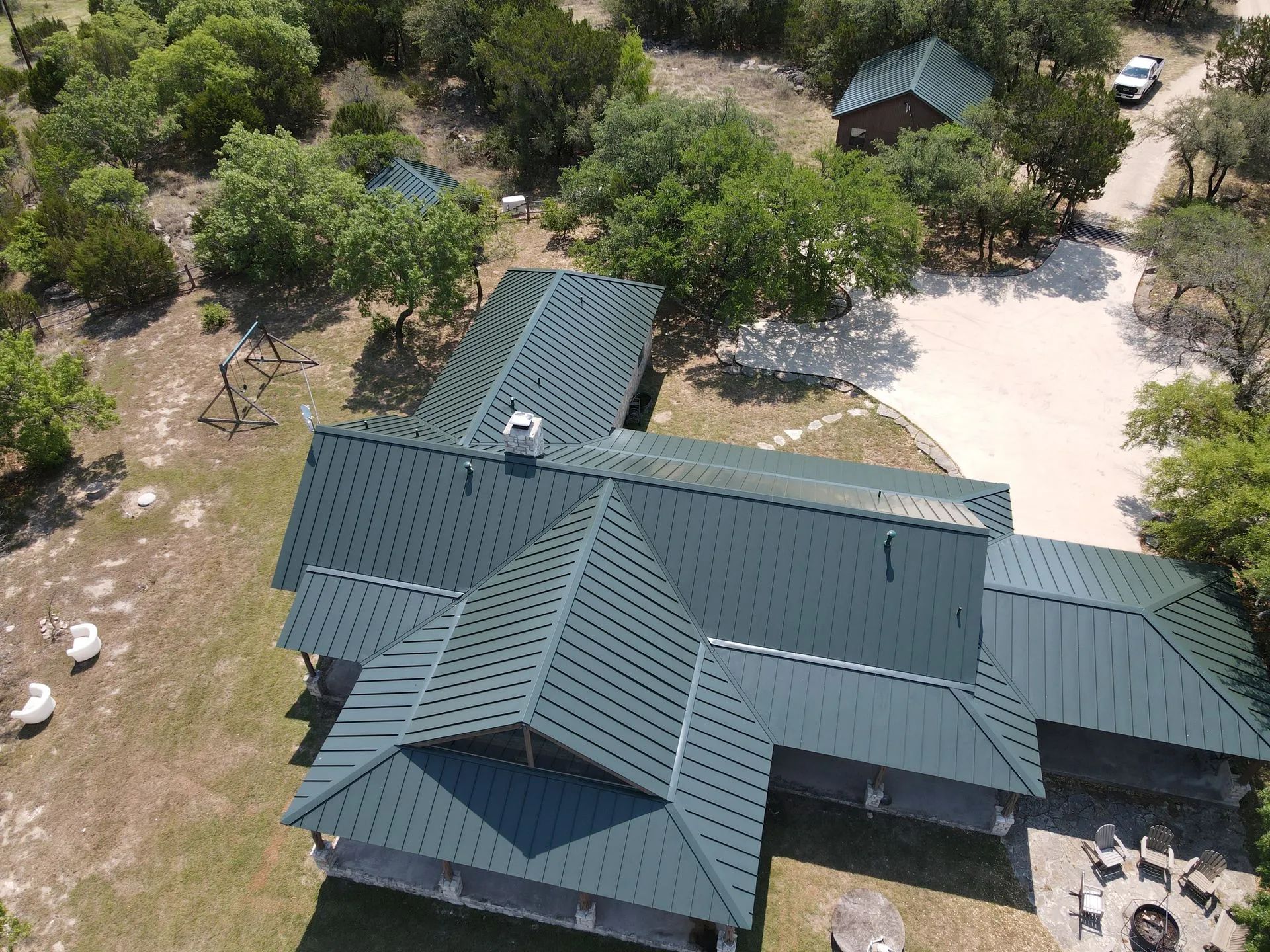
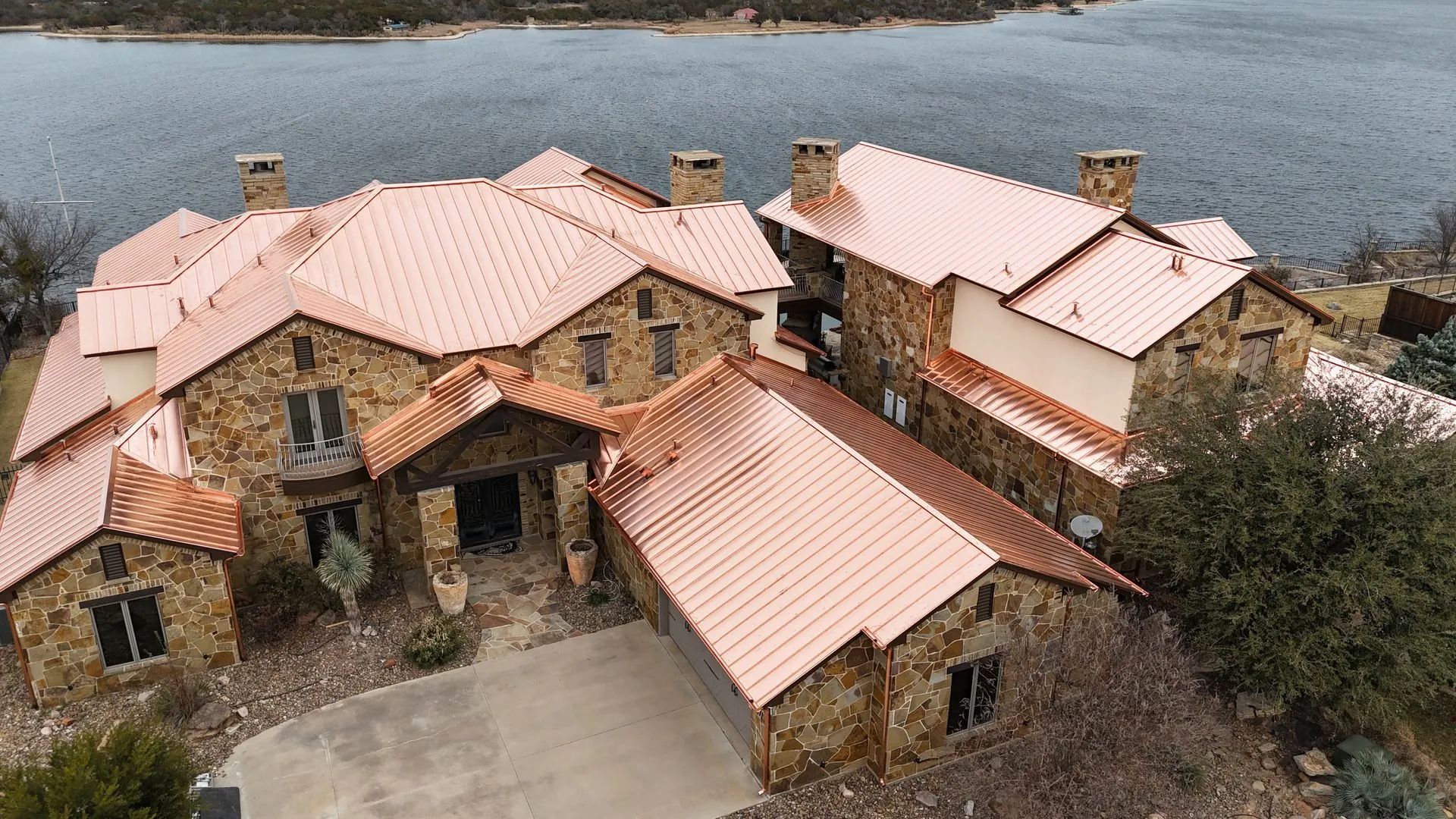
A standing seam panel runs in one long piece from the ridge down to the eave. The edges of neighboring panels turn upward and lock together in a raised seam, and the panels are held to the deck by concealed clips rather than screws driven through the face. Because nothing penetrates the visible surface, the field of the roof has no exposed fasteners to loosen over time. Concealed clips also let each panel move with the heat instead of fighting it, which is a real advantage when a July afternoon can swing a roof surface by many degrees. Panels can be formed in steel, aluminum, or copper, and they can be roll formed on site to the exact length of each roof run, so there are no end laps to seal on most roofs.
Stone Coated Steel
A stone coated steel roof starts with a steel panel, usually a Galvalume or similarly protected base, that is stamped into a profile resembling a tile, a shake, or a shingle. The face is then coated with an acrylic bonded layer of ceramic coated stone granules. Panels are smaller than standing seam panels, they interlock along their edges, and they are fastened to the deck in a way that is hidden beneath the overlapping courses above. The finished roof delivers the texture and shadow lines of traditional materials with the weight and durability profile of steel.
Put simply, standing seam is a smooth, linear system, and stone coated steel is a textured, dimensional one. Everything else flows from that difference.
The Look From the Street
Appearance is where most homeowners make up their minds, and it is worth being honest about what each system does well.
Standing seam produces long vertical lines that make a roof feel crisp and deliberate. On a ranch home, a modern farmhouse, a barndominium, or a contemporary design with clean geometry, that look fits naturally. The seams cast thin shadows that change through the day, and the smooth surface reflects light in a way that gives a roof a finished, almost architectural presence. Color choices run from deep bronze and charcoal to bright white and classic red, all with baked finishes designed to hold their color.
Stone coated steel leans the other direction. The granule surface is matte and slightly rough, and the profile breaks up the roof into a rhythm of tiles, shakes, or shingles. On a Spanish style home, a Tuscan inspired build, a craftsman, or a traditional brick home common across Arlington and Fort Worth neighborhoods, that texture blends in comfortably. Neighbors often cannot tell at a glance that it is steel at all, which is exactly the point for owners who want durability without changing the character of the street.
TIP: Ask to see full size panel samples outdoors, in direct sun and again in shade, before you commit. A small brochure chip rarely shows how a profile reads across an entire roof plane, and color shifts noticeably between morning light and late afternoon.
Slope and Roof Shape
Roof pitch is one of the most practical factors, and it can settle the decision before looks even enter the conversation.
Standing seam can be installed on much lower slopes than most other residential roofing, because its long panels, tight seams, and absence of exposed fasteners shed and seal water well even when the water moves slowly. That makes it a strong choice for low pitch porches, shed style additions, modern designs with minimal slope, and many metal buildings. On very low slopes, seam type and sealant details matter, so the specific panel profile should be matched to the pitch.
Stone coated steel is a better fit on moderate to steep pitches, where its overlapping courses shed water the way tile or shingles do. As the slope flattens, an overlapping, textured profile has more places where water can linger or be driven backward by wind, so most manufacturers set minimum slope requirements for their panels. If your roof has a lot of steep gables, dormers, and valleys, stone coated steel handles that complexity well, since smaller panels can be cut and fit around awkward shapes. If your roof is low and simple, standing seam usually makes more sense.
A quick way to think about it: complicated, steep, and traditional favors stone coated steel, while simple, low, and modern favors standing seam. There are plenty of exceptions, which is why walking the roof matters more than any rule of thumb.
Hail, Wind, and Texas Weather
Anyone who has lived through a spring in Burleson knows that hail is the weather event that shapes roofing decisions here. Both systems are built to take that punishment, though they do it differently.
Stone coated steel is well known for strong impact ratings, and many panel lines carry a Class 4 impact rating, which is the highest tier in the common impact resistance test. The steel base resists fracturing, and the granule surface helps absorb and spread the force of a strike. Standing seam panels can also perform very well against hail, particularly in heavier gauges, though a hard strike can leave cosmetic dimples in thinner panels even when the roof keeps shedding water perfectly. Dimpling does not usually compromise a metal roof's ability to keep the weather out, but some owners care about a perfectly smooth appearance, and that preference is a fair part of the decision.
Wind is a strength for both. Steel panels that are interlocked, clipped, or fastened to a solid deck hold up under the gusts that come ahead of North Texas storm fronts far better than loose lightweight materials. Proper installation is what makes that true, including correct clip spacing, proper deck preparation, and sound flashing at every edge and penetration. A good roof system installed poorly can still fail early, so who installs it matters as much as which system you choose.
Heat is the other constant in this region. Both systems can be finished in reflective coatings that reduce the amount of solar heat a roof passes into the attic. The stone granule surface also adds a small measure of thermal mass. Combined with proper attic ventilation and insulation, either system helps a home stay more comfortable through long summers.
Sound, Weight, and Maintenance
Homeowners often ask about noise, and the honest answer is that on a complete residential assembly with solid decking, underlayment, and attic insulation, both systems are quieter than most people expect. The granule layer on stone coated steel gives it a slight edge in absorbing impact sound, while standing seam relies on the assembly beneath it. Neither one should sound like a barn roof in the rain when built correctly.
Weight is similar in practice. Both are far lighter than concrete or clay tile, which means they can usually be installed without reinforcing the roof structure, even when the look they imitate is a heavy tile. That is a meaningful advantage for older homes and for owners who want the tile appearance without the load.
Maintenance on both is light. Standing seam has no exposed fasteners to back out and no face screws with washers that age, so routine care is mostly keeping debris out of valleys and checking flashing and sealants at penetrations. Stone coated steel needs the same attention to valleys and flashings, plus an occasional look for moss or algae in shaded areas, since the textured surface can hold moisture longer than a smooth panel. A gentle cleaning is typically all that is required.
WARNING: Do not walk a metal roof casually or hire anyone to power wash granule coated panels at high pressure. Steel panels can be slick and dangerous underfoot, and aggressive pressure can strip the stone coating. Let a roofing professional handle inspection and cleaning.
Matching the System to Your Property
Choosing between the two gets easier when you stop asking which is better and start asking which one suits your specific home.
If your house has a clean, contemporary, or farmhouse profile, a low or moderate pitch, and a design that benefits from long uninterrupted lines, standing seam is likely to look right and perform well. It also suits barndominiums and metal buildings, where the roof is a major visual element and the panels can run the full length of the structure.
If your home has a traditional look, steep pitches, several dormers and valleys, or an architectural style where tile or shake is part of the identity, stone coated steel preserves that character while giving you a steel roof underneath. It is often the right answer in neighborhoods where a homeowners association or the surrounding houses lean toward a classic appearance.
Some properties even use both. A main roof in stone coated steel with a standing seam accent over a porch, bay window, or addition can tie a house together while matching each section to its slope. A contractor who installs both systems can recommend the combination that makes sense, rather than pushing one product for every roof.
What to Ask Before You Decide
A short list of questions will tell you most of what you need to know about any roofing proposal.
Ask which panel profile and steel gauge are being proposed, and what impact rating applies to it. Ask how the roof will be attached, whether clips, interlocking courses, or fasteners, and how thermal movement is handled. Ask what is going on beneath the panels, including decking condition, underlayment, and ventilation. Ask who will handle flashing at chimneys, valleys, skylights, and walls, since those details cause far more problems than the panels themselves. Finally, ask what warranty covers the materials and what covers the workmanship, and who stands behind each.
A contractor with decades of field experience will answer those questions directly and walk you through the reasoning, not hand you a brochure. That kind of conversation tells you more about the finished roof than any sample board.
Frequently Asked Questions
Is stone coated steel really metal, or is it a shingle?
It is steel. A protected steel sheet forms the panel, and the granules on top provide the texture and color. The structure and durability come from the steel underneath.
Which system holds up better against hail?
Both perform well when properly specified. Stone coated steel often carries Class 4 impact ratings, while standing seam in a sturdy gauge also resists hail, though thinner panels can show cosmetic dimples.
Can either system be installed over my existing roof?
Sometimes, depending on the deck condition and the number of existing layers. Many homeowners prefer a full tear off so the deck can be inspected and repaired first.
Which one is better for a low slope roof?
Standing seam is generally better for low slopes because of its long panels, tight seams, and concealed fasteners. Stone coated steel is designed for moderate to steep pitches.
Do the two systems fade or lose their color over time?
Both use baked or bonded finishes made to resist fading. Gradual color changes can appear over many years, but quality finishes hold up well in strong Texas sun.
Can I combine standing seam and stone coated steel on one home?
Yes. Many homes use one system on the main roof and the other on a porch or addition, as long as colors and profiles complement each other and suit each section's slope.
Pick the Roof That Fits Your Home
Standing seam and stone coated steel are two strong answers to the same question, and neither one is better in every situation. Clean modern lines and low slopes favor standing seam, while traditional texture and steep, busy rooflines favor stone coated steel. Both resist hail, wind, and heat when installed correctly. The best choice comes from walking the roof, studying the pitch, and judging how each profile will read against the rest of the house.
With 45+ years of experience roofing homes in Burleson, TX, Metal Master Roofing and Construction LLC
has installed both systems on everything from ranch homes to tile style traditionals. Careful flashing, correct attachment, and sound decking matter as much as the panel itself, and decades of field work make that clear. Homeowners who match the system to their slope and style end up with a roof that looks right and performs well for generations.